How to Play Fallen Lineage
Core loop, hub UI, difficulty expectations, and how a run is structured solo or in a party of four.
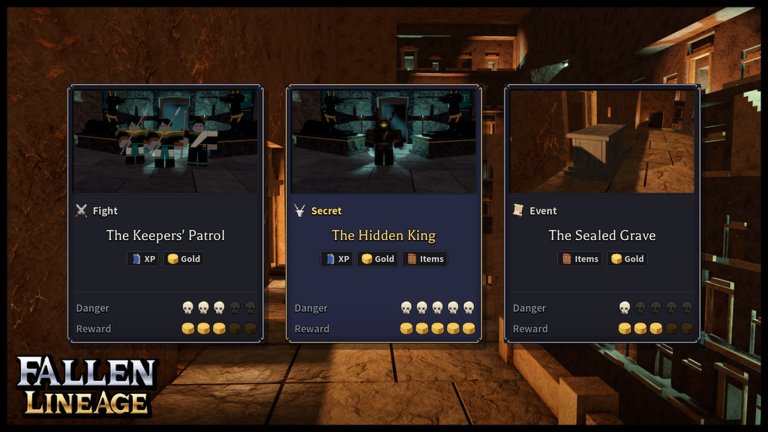
Fallen Lineage plays like a classic turn-based party RPG fused with roguelite runs on Roblox. You prepare in a hub, enter a dangerous expedition, plan every combat turn, spend Lives when plans fail, and return to the castle hall to adjust race, class path, and loadout. This How to Play guide explains that loop in plain language so new groups share the same vocabulary before the hard difficulty warning becomes a wipe montage.
If you have not finished onboarding yet, skim Getting Started first. For fight-level detail, use the Combat Guide. For optimization after you understand the loop, open Best Builds and Reroll Tokens, Reset Orbs & Lives.
The core loop
- Hub time — After tutorial, you stand in the castle hall. This is where you shop, redeem codes, form a party, and decide whether to spend Reroll Tokens.
- Commit to a run — Leave the hub into the roguelite route. Expect escalating encounters rather than a single linear quest map.
- Plan turns — Combat is turn-based. Each round you choose actions, targets, and skills with incomplete information and real consequences for mistakes.
- Spend Lives carefully — Lives are the fail buffer. Burning them on greed turns shortens the run.
- Return and adjust — Back in the hub, review what failed. Maybe the race roll is weak, the class fantasy does not match the party, or the caller never set threat priority. Fix one variable per attempt.
That loop is the game. There is no separate “real game” unlocked after a secret grind gate. Mastery is tighter planning and better party roles.
Hub UI that matters: Shop and Codes
The Shop is not only cosmetics. It includes a Codes tab where you enter promo strings. Active codes—SOMANYSHUTDOWNS, mybelovedcrits, PARAGUAY, 400CCU, UPDATE2, and any newer drops listed on Codes—are free progress. Redeem them before you judge your account power. Step-by-step UI help lives on How to Redeem Codes.
Make a habit: every login, check the Codes hub, redeem anything new, then decide on rerolls. Players who skip the tab for a week often invent a skill issue that was actually a missing Token stack.
Difficulty warning is not flavor text
Fallen Lineage signals hard difficulty for a reason. Enemy kits punish unfocused turns. If your party treats the first elite like a tutorial dummy, you will learn Lives math the painful way. Adjust expectations:
- Clear information beats highlight reels. Call the kill target before skills fly.
- Defensive or control turns are winning turns when they preserve Lives.
- A slower clear with full Lives is better than a stylish wipe.
- Solo mode means you own every role gap; play wider kits or safer races until you learn patterns.
Solo versus party of four
Solo teaches the full ruleset. You choose race and class without negotiation, and every mis-click is yours. Use solo to learn enemy tells, then bring that knowledge to groups.
Party (up to four) is the intended social mode for many players. Before you leave the hall:
- Agree on a turn caller.
- Spread bases: Warrior or Lancer for front pressure, Rogue or Archer for focused damage, Mage for burst or support branches, Bard for party utility. Community Fist and Thief mentions can fill niche slots when available.
- Talk alignment goals early. Order, Neutral, and Chaos super-classes change identity—Order Priest is not Chaos Pyromancer, and Herald is not Jester. Align the fantasy so nobody rerolls mid-run out of spite.
Run structure in practice
Think of a run as chapters: opener fights to test targeting discipline, mid-run resource checks where skills and Lives matter, and spike fights that punish greed. Between chapters you briefly reassess: is the Mage forced to heal every turn because the Warrior never peels? Is the Bard silent because nobody waits for buff windows? Pause in safe moments and reset the plan.
Class fantasy expands after base choice. Examples from the current kit map include Warrior into Order Knight, Neutral Sellsword, or Chaos Berserker; Rogue into Duelist, Assassin, or Outlaw; Mage into Priest, Druid, or Pyromancer; Lancer into Sentinel, Dragoon, or Gladiator; Bard into Herald, Skald, or Jester; Archer into Marksman, Gunner, or Ranger. You do not need every branch memorized on day one, but you should know where to look: Classes and the Class Tier List. Race power and reroll value sit on Races and the Race Tier List.
How this page connects to the rest of the wiki
- New account checklist: Getting Started
- Fight execution: Combat Guide
- Loadouts: Best Builds
- Tokens and fail resource: Rerolls & Lives
- Free rewards: Codes
Play one clean hub-to-run cycle with a party that shares this vocabulary. Then deepen systems instead of hopping into advanced builds blind. Fallen Lineage rewards groups that treat turns like decisions, not like animations to skip.
Frequently Asked Questions
Quick answers to the most common questions.
What is the basic Fallen Lineage gameplay loop?
Prepare in the castle hub, enter a run, plan turn-based fights, manage Lives, then return to adjust race, class, and loadout.
Where is the Codes tab?
Inside the Shop from the hub. Redeem strings listed on the Codes page before long runs.
How many players can join one run?
You can play solo or in a party of up to four players.
Why does the game warn about difficulty?
Encounters punish poor threat priority and greedy turns. Planning is required to protect Lives.
When should I read Best Builds?
After you understand the loop and Lives economy. Learn How to Play and Combat first, then optimize.